A Space of Time
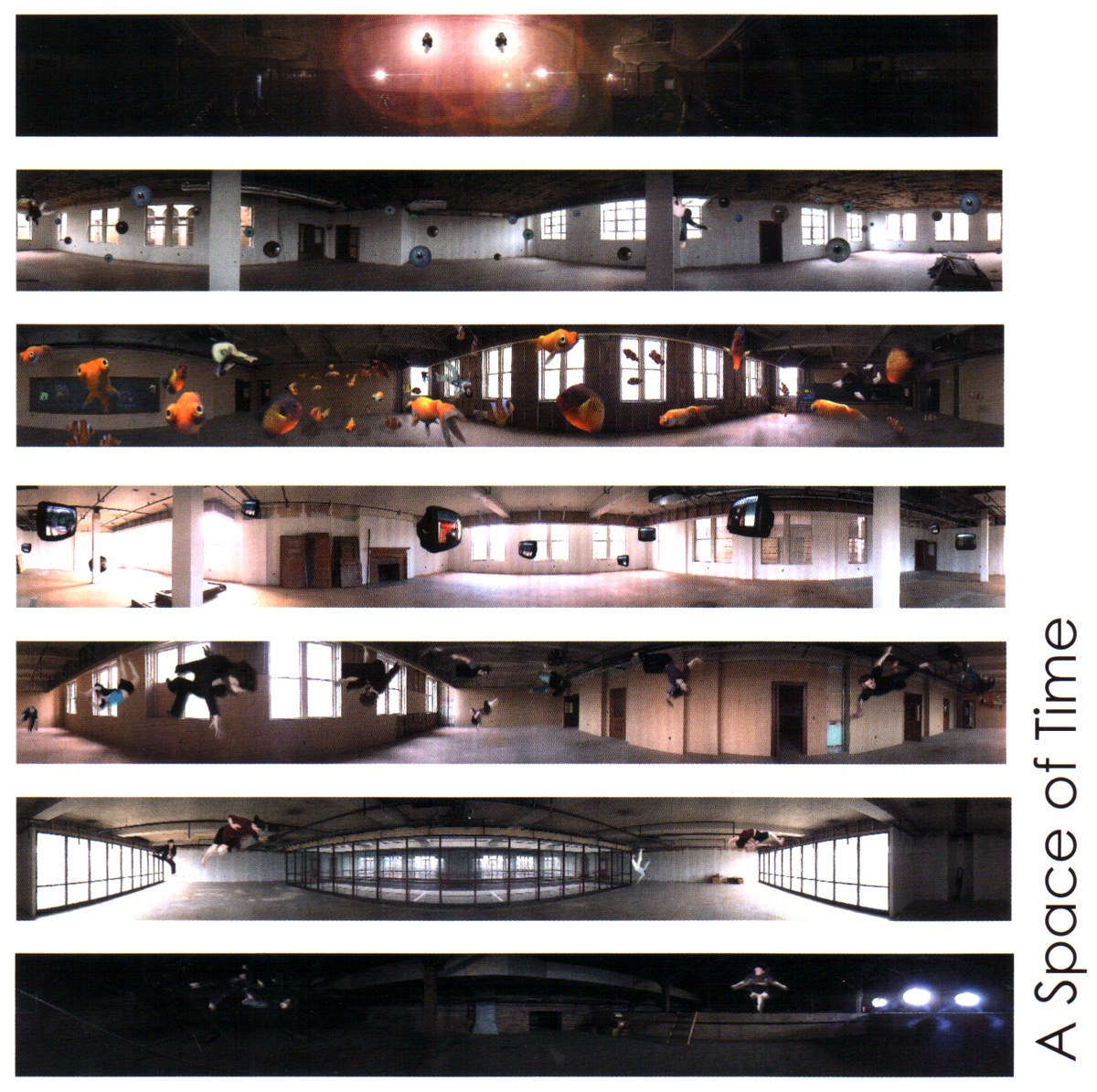
Not a linear tale but a space that holds one. A Space of Time is a vast library of moments set inside a century-old building — a story you explore rather than one that plays for you. It was assembled between 2000 and 2003, released in 2003, and remastered in 2020: variable cinema two decades before generative AI made the idea ordinary.
Limbo
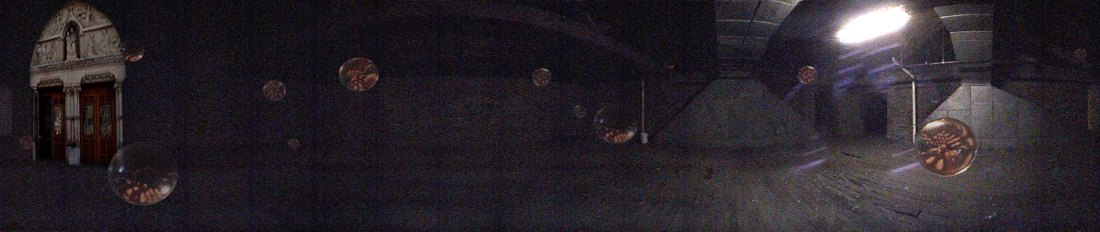
Wander a photorealistic reconstruction of the building through 190 QuickTime-VR panoramas. There is no plot handed to you; the space itself gives up the story. Moving through the rooms uncovers the narrative's fragments, one vantage at a time — the work is spatial before it is anything else.
Stream of Consciousness
A unique linear film every viewing. Statistical formulas rearrange scenes and pull in complementary videos, shuffling and selecting by probability, while fixed opening and closing sequences hold the story coherent. This is the generative mechanic the later films inherit — the first turn of a method that runs for the next twenty years.
The first modular film: A Space of Time · 2003 → Accidental Occurrence · 2017 → Big Data · 2019 → Uku Pacha · 2021
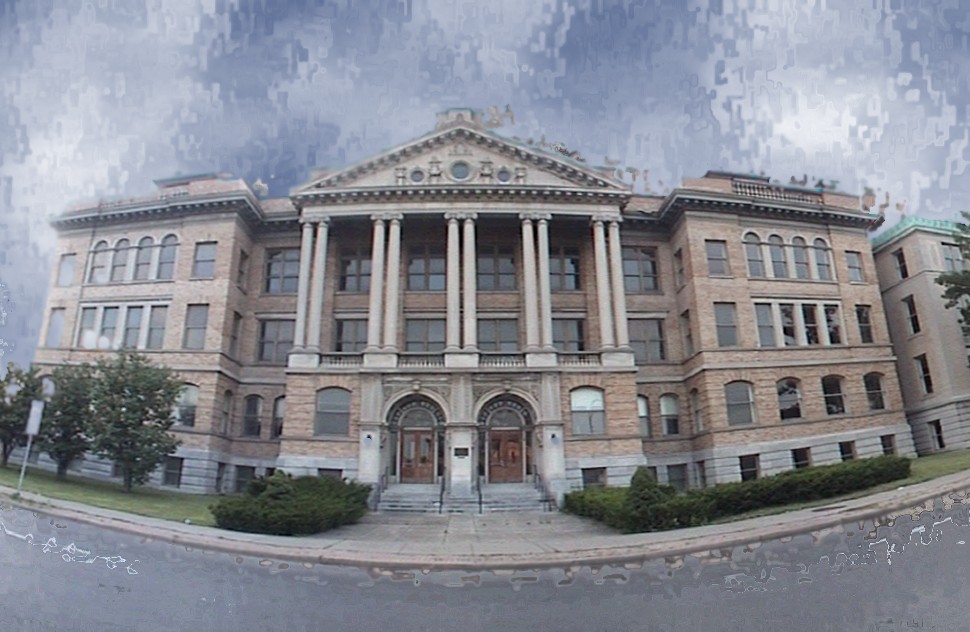
The building — photographed as a 360° panorama.
At its center is David, a homeless man who takes refuge in an abandoned century-old building. He begins to experience temporal-lobe epilepsy — vivid hallucinations that blur his own past, the building's history, and the present they share. He becomes convinced the walls hold fragments of time: preserved moments from everyone who ever passed through them.
Through a series of interviews he weaves those fragments into his own account. Above all he recounts Pandora, a young woman whose visit becomes the focal point of his story, along with the building's regulars — Ira the janitor and his nephew Jeremiah. Pandora's thread is a fierce critique of the advertising industry: the constant manufacture of artificial needs and anxiety, which she channels into animated poems shared online.
That same critique of persuasion and data returns, sixteen years later, as Big Data.
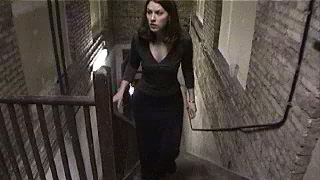
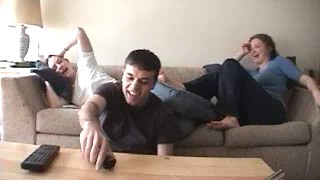
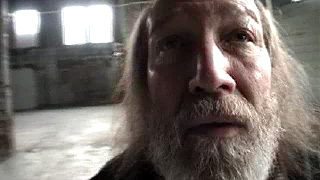
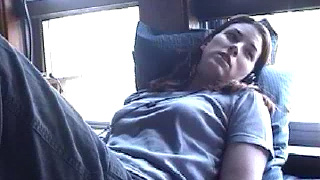
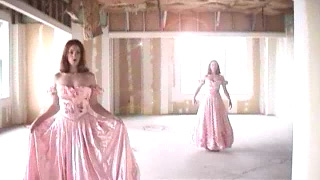
320 × 180 — video optimized to stream multiple sequences from one CD-ROM. The resolution is the period.
Trailer · 2003
Every path through the work was logged. A quantitative, time-series study tracked 435 viewers as they moved through the experience — "The Medium is the Measure of Itself" — and earned the Syracuse University Graduate School Doctoral Prize in 2004. The floor plans mapped the story to the real building, room by labeled room, so that behavior in the work could be read against the architecture that held it. The dissertation on the timeline →
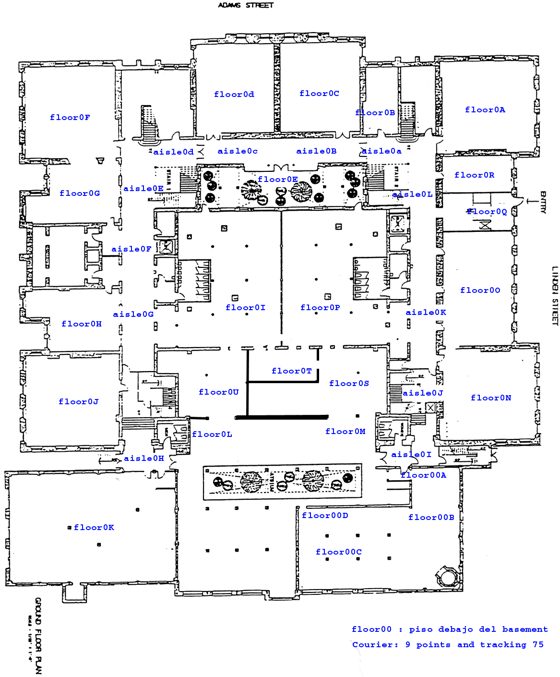
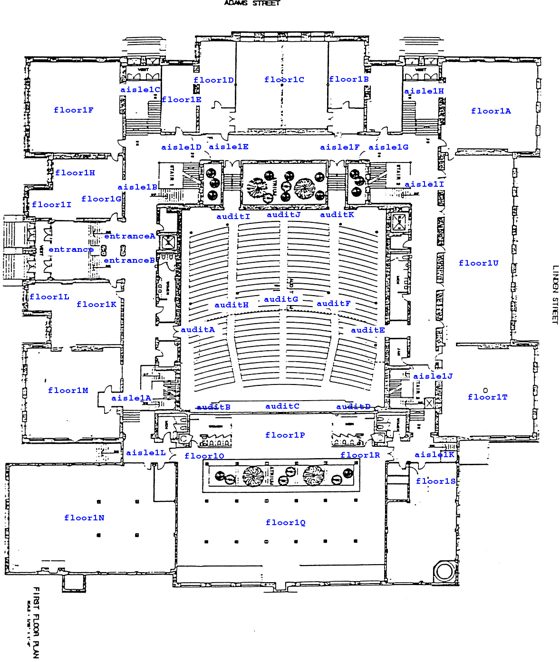
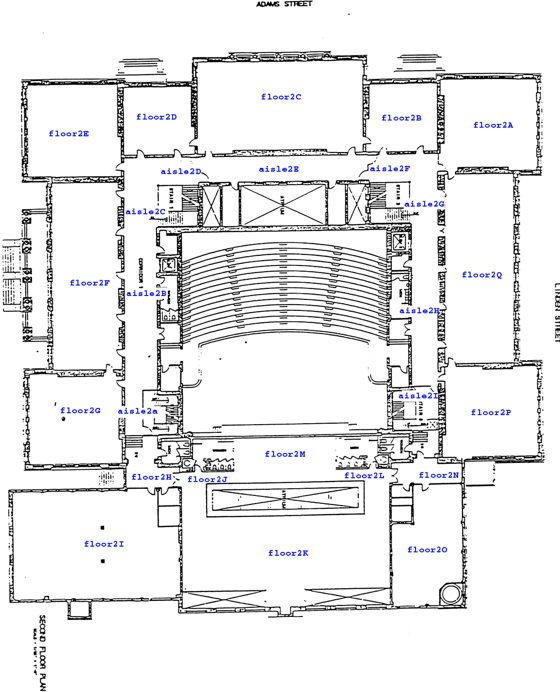
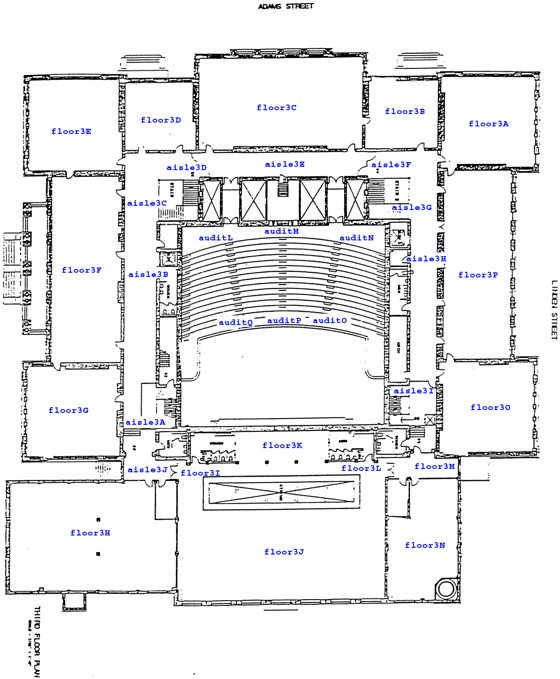
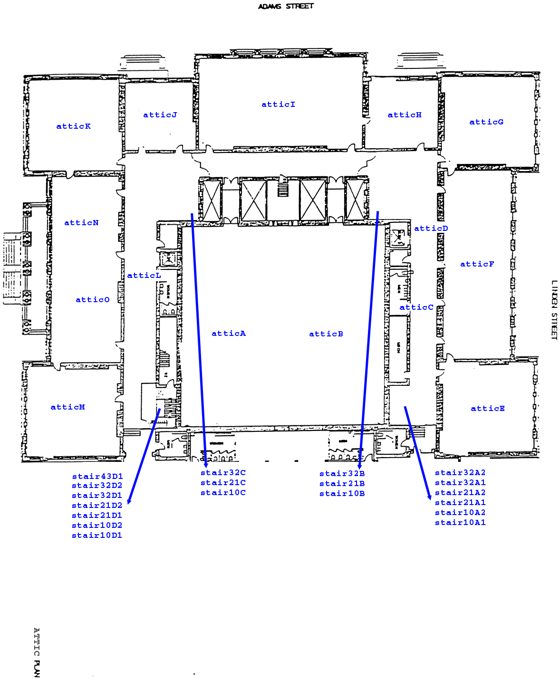
The building, floor by floor — every room labeled, annotated in the plan's own hand: "Courier: 9 points and tracking 75." The last plan still carries the blue tracking paths mapped through the space.
Composed by Sarah Pickett with Diego Bonilla.
“The day of the arrival” — the opening track. The full fifteen-track soundtrack at archive.org →
First Prize, Internet / Multimedia
XXVI Moscow International Film Festival — Russia, 2004.
Art Direction Award — Philadelphia Documentary & Fiction Festival (USA, 2004)
Honorable Mention — XV Videobrasil International Electronic Art Festival (Brazil, 2005)
Doctoral Prize — Syracuse University Graduate School (2004), for the 435-viewer tracking study.
European Media Arts Festival (Germany)·Basics Festival (Austria)·Media Arts Festival (Netherlands)·Toronto Online Film Festival (Canada)·New Forms Festival (Canada)·Arte Digital: Poéticas y Lenguajes (Cuba)·Artrónica (Colombia)·Viper Basel (Switzerland)
It did not travel as a film to be reviewed. It entered scholarship as a case — the same experiment read from five disciplines at once, each treating it not as an early interactive film but as an argument about what a film can be.
George P. Landow — Hypertext 3.0
Johns Hopkins University Press, 2006
The foundational theorist of hypertext reads Stream of Consciousness as a "multiplied cinema" and Limbo as a virtual-reality hypertext — its QuickTime-VR navigation kin to Myst and Riven — placing the work inside the theoretical history of the form it belongs to.
Gemma Aguilar — Fragmentation & hypertext on the web
AE-IC founding conference, Santiago de Compostela, 2008
Sets the work beside Borges's "Funes el memorioso": both make a disturbance of memory the reason to break linear narration — but here the fracture takes navigable, audiovisual form, and joins a Latin American lineage of memory and unstable subjectivity.
Jasmina Kallay — Gaming Film
Palgrave Macmillan, 2013
The most searching reading. She grants the formal ambition, then presses the hard question: can a crowd of autonomous narrative units carry the cumulative dramatic force of a finished film — does navigational freedom deepen engagement, or loosen its momentum? The work earns the challenge by raising it.
German A. Duarte — Fractal Narrative
transcript Verlag, 2014
Takes Limbo as ergodic narrative — the viewer must do real navigational work to produce a sequence — and folds it into a theory of fractal narrative: story organized spatially, algorithmically, and recursively rather than by the clock.
Héctor Perea — El cine ilimitado de Diego Bonilla
Las formas plurales de la genericidad literaria · Colloquia (Sorbonne), 2019
Treats A Space of Time as the foundation of Bonilla's unlimited cinema — the point at which a film no longer has to exist as one permanently edited sequence, and opens onto contingency, variation, and endless reconstruction. Accidental Occurrence he reads as its later refinement.
Five frameworks — hypertext theory, literary memory, game-and-film studies, ergodic and fractal narrative, the history of cinema — and one shared recognition: that here a film stops being a fixed, singular sequence and becomes a question about the nature of the medium. Twenty years on it is still taught — Perea set it, with Accidental Occurrence and Uku Pacha, in a 2024 UNAM graduate seminar on literature at the margins of the other arts.
Its theory was written alongside it: the Syracuse dissertation above, and — by Bonilla — "La estructura como narrativa" (Razón y Palabra, 2006) and, with Denis Porto Renó, a study of interactive cinema (2007).
It was made for the machines of 2003. It stayed fully functional through 2011, was last recompiled in January 2017, and was remastered in 2020. Today the PC build no longer runs on modern Windows; on a Mac, Stream of Consciousness still runs and Limbo runs in part. A legacy work, kept as what it is — an artifact of its moment.
The original build is preserved in the artist's archive.
A non-linear multimedia story by Diego Bonilla,
with Sarah Pickett, Amber Hansel, Michael Heroux and John Mannion.
Music composed by Sarah Pickett with Diego Bonilla.
Starring David Kinney · Sarah Melton · Branko Glad · Alice Wedoff · Tom Ranger · John R. LaCasse · Anne Fitzgerald · Roy Van Norstrand · Robert Pickett · Peter Moller · Mike Vertino