A photographic-VR invention · 2005 — 2009
QuickTime VR let you look around. This invention set out to let you walk.
The idea
Photographic virtual reality, around 2005, meant QuickTime VR — photographic fidelity, but a single 360° panorama seen from a single point of view. You could turn and look; you could not move.
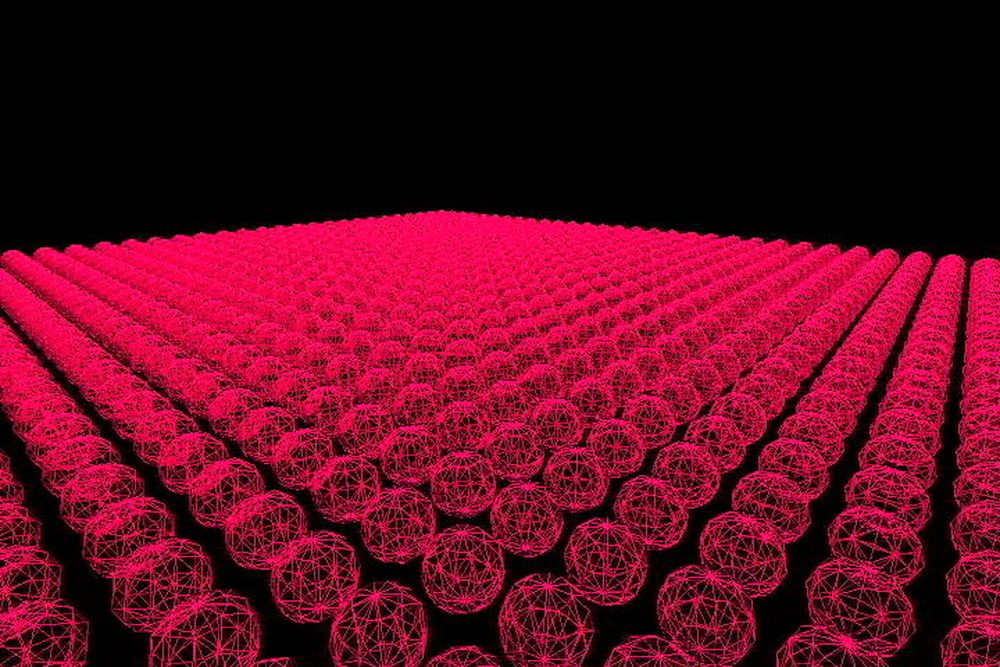
Computer-rendered 3-D gave you movement, but not photographs. Dense Space set out to combine the two: instead of one panorama per location, a dense mesh of thousands of 360° panoramas taken roughly an inch apart, so that a real, photographed space becomes something you can traverse. The proof of concept held about 2,500 panoramas in a single environment.
"A Dense Space is a significant advancement from the current state of photographic virtual reality such as QuickTime VR… based on a photo quality rendition of a single 360-degree panorama from only one point of view." from the provisional patent application, 2006
Many panoramas make a walkable space the way many still frames make a motion picture.
The move
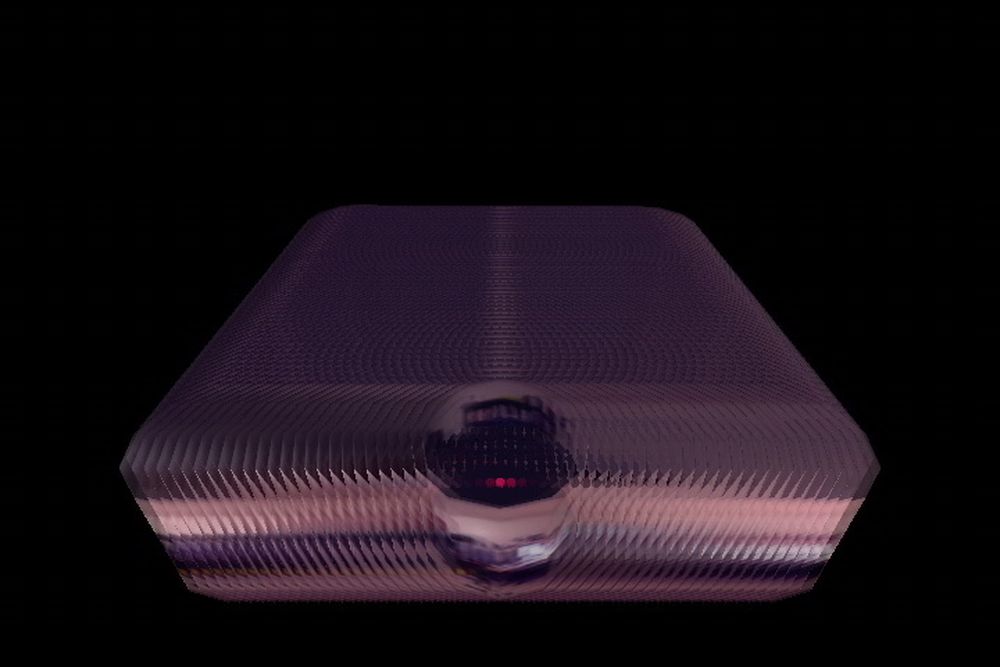
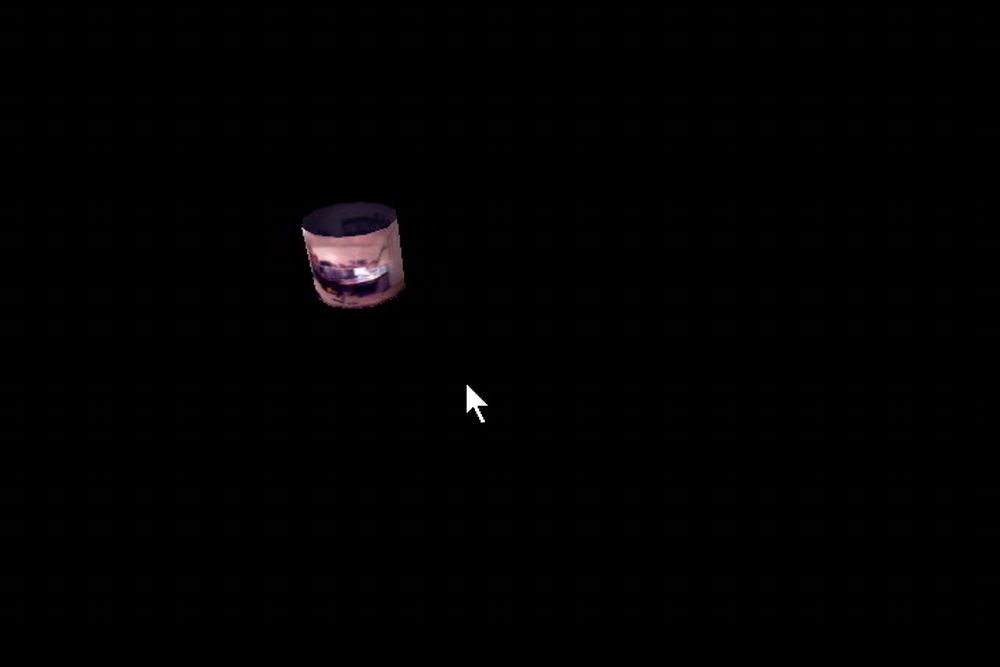
The whole invention is one move — from a single vantage you pan within, to a field of vantages you walk across.
Left: QuickTime VR — one point of view, pan only. Right: Dense Space — a mesh of panoramas about an inch apart; any path through it can be walked.


The apparatus
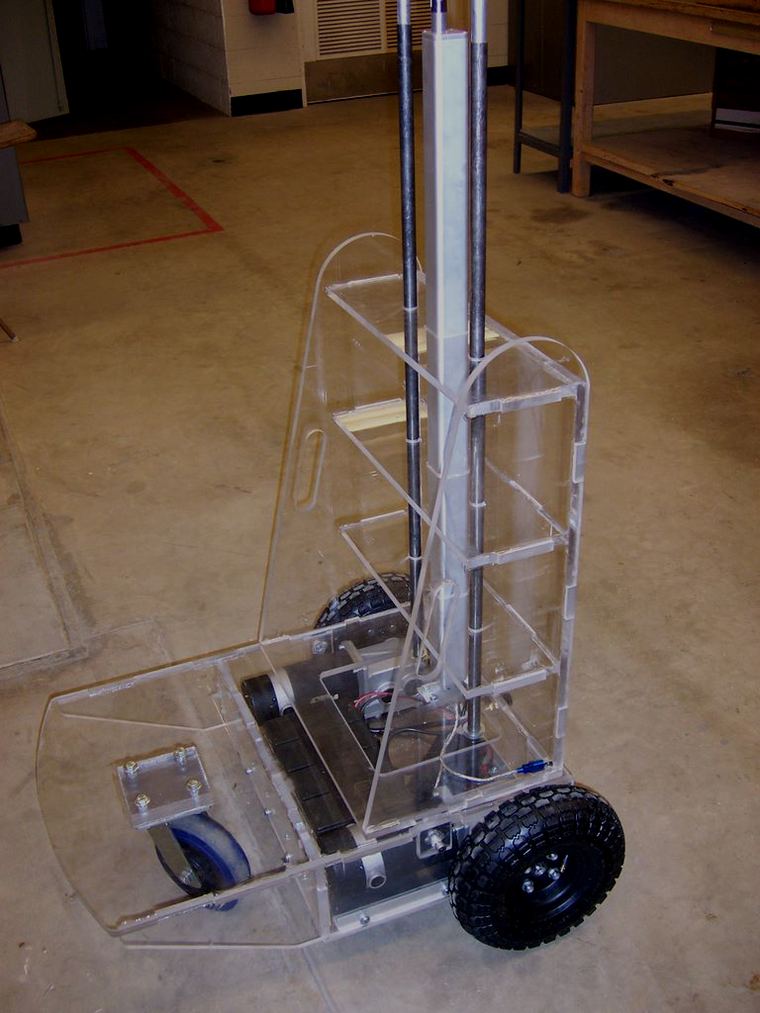
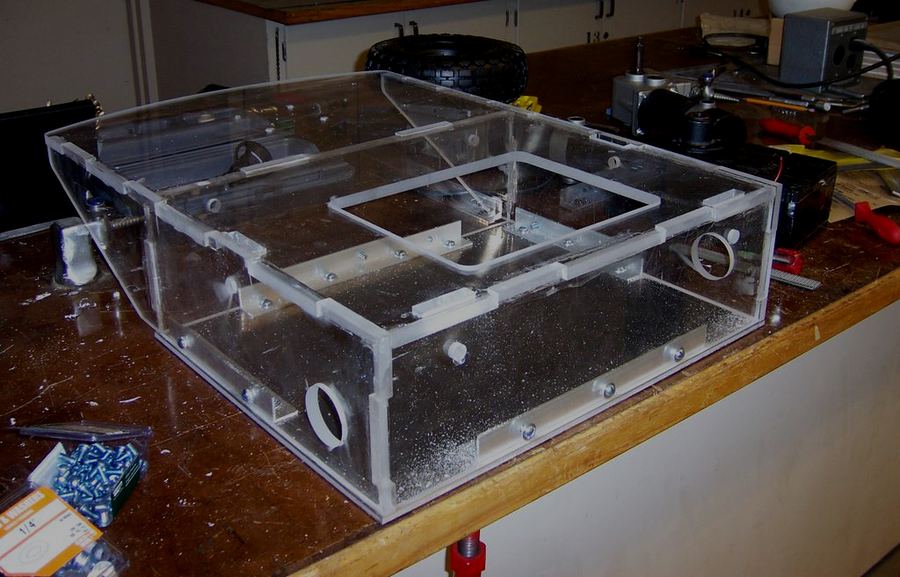
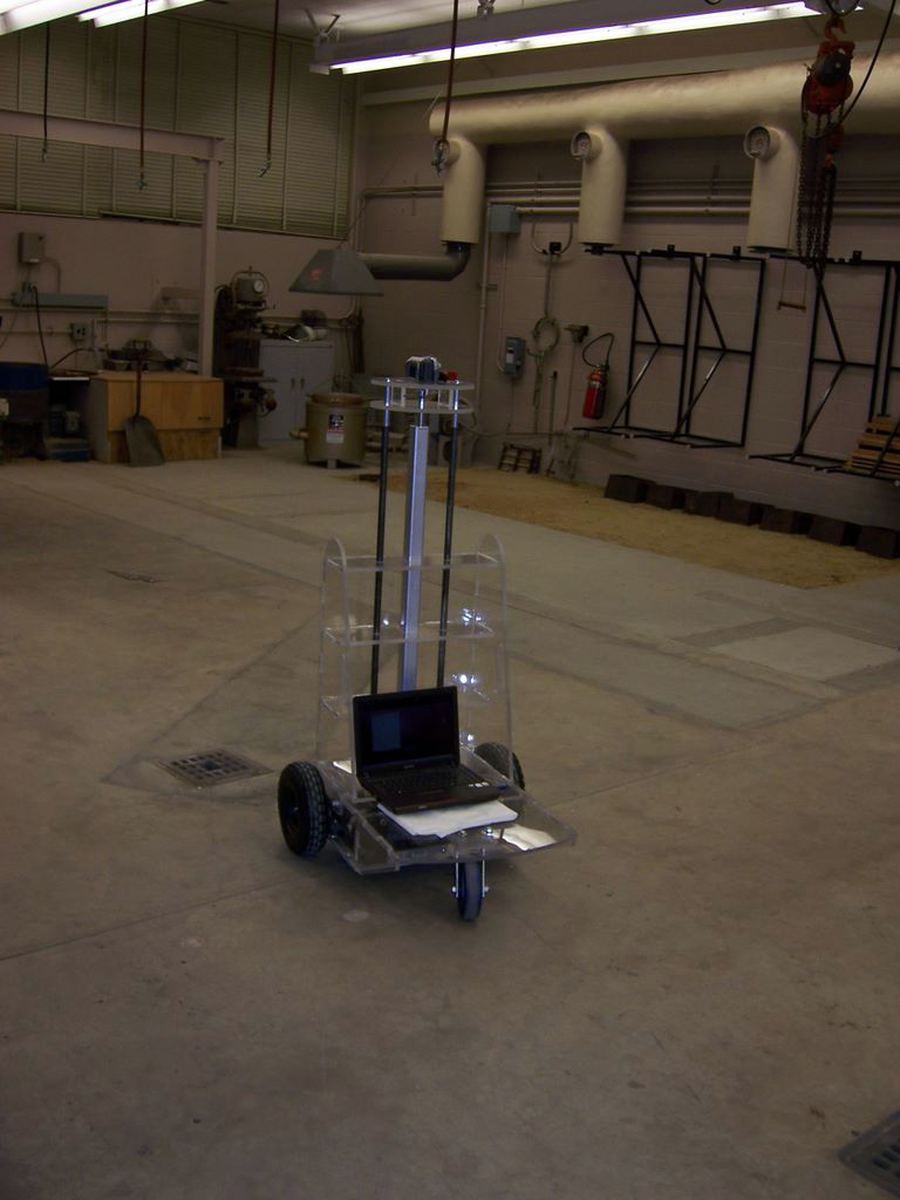
Capturing thousands of panoramas an inch apart is not hand work. A purpose-built robotic camera cart — the "Nomad" — moved through the space and fired the camera at each point on a grid. Each exposure caught the full surround at once through a conic mirror; a custom Photoshop action then unwrapped the mirrored image into a flat panorama. The cameras were consumer models of the era — an early Sony Cyber-shot, later a wifi-capable Nikon Coolpix chosen so the cart could trigger and offload frames without a tether. The environment itself ran in Macromedia Director MX 2004, scripted in Lingo — 229 source files survive — with the ShapeShifter3D extension for the 3-D work; its output was built for the desktop monitor, head-mounted displays, projection domes and multi-projector rooms alike.


~2,500 panoramas · ~1-inch spacing · "nomad" robotic camera cart · 229 lingo source files · director mx 2004
The decision
He filed a provisional patent for the method in 2006.
When a prior-art search in early 2007 revealed that published research — Aliaga et al.'s "Sea of Images" — had already established the same architecture, he chose not to pursue the full patent.
The idea was real and the engineering was real, and someone else had published it first. Declining to push a marginal novelty claim into an established prior-art space is part of the work's story, not a footnote to it.
Aliaga et al.'s "Sea of Images" is published research; it is the only outside work named here, and it deserves the naming.
What remains
The work survives in the author's archive — thirteen Director files, 229 Lingo sources, the presentation builds, the proof-of-concept environments. None of it is deployed today. Its question — photographic fidelity you can walk through — went on to be answered by the industry at scale; this page keeps the 2005 version of the answer.
Credits
Diego Bonilla — concept, engineering, programming, direction.