AI songbook & open educational resource · 2023
The theories of a discipline, sung — each entry a summary, a song, and its images.
The work
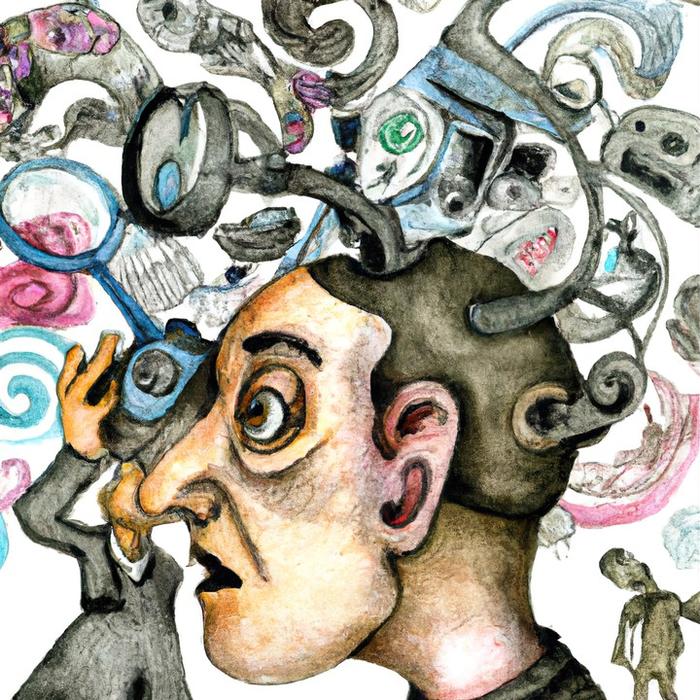
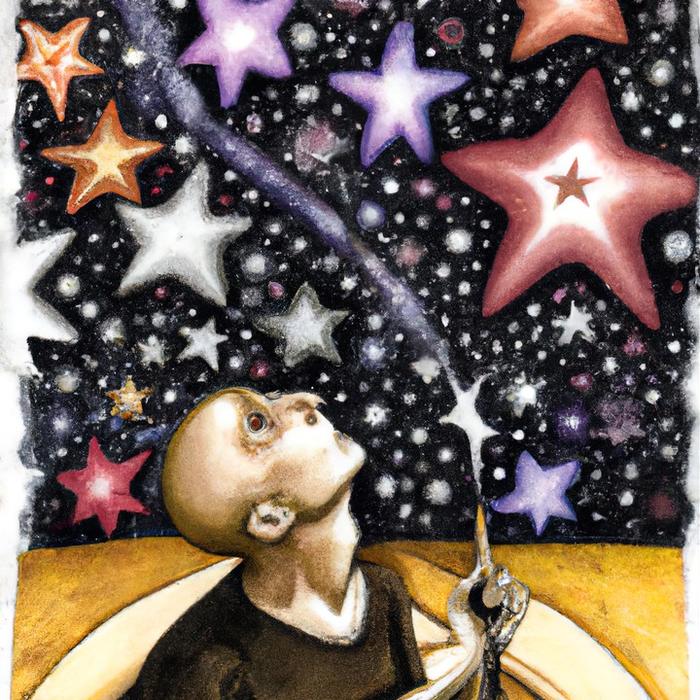
In 2023, Bonilla turned the theories of his discipline into a songbook. Scholarly Stanzas is an AI-assisted open educational resource and electronic-literature work published by Hypergraphia: 586 entries — theories, models, concepts, principles, paradigms — and for each of them a summary of about a hundred words, a structured song, a suite of images, routes into the research literature, and downloadable teaching materials.
The songs are the wager. Rhythm, repetition and refrain give abstract theory a personality and a mnemonic shape — an approachable way in, and a counter to the machine's default monotone. It is a wager, not a finding: no learning study of the songbook has yet been made, and the work itself invites the comparison.
Every entry ends by pointing away from itself — to Semantic Scholar, Google Scholar and Books, university-domain search, the open web. The summaries and songs are an introduction to a literature, not a substitute for it.
586 entries · ~7,050 unique images · 31 thematic categories · ~90 python programs · 2 printed volumes
The category "theory" is used broadly, and the selection itself used AI: the songbook is panoramic, not a canon of the field established by peer review.
The index
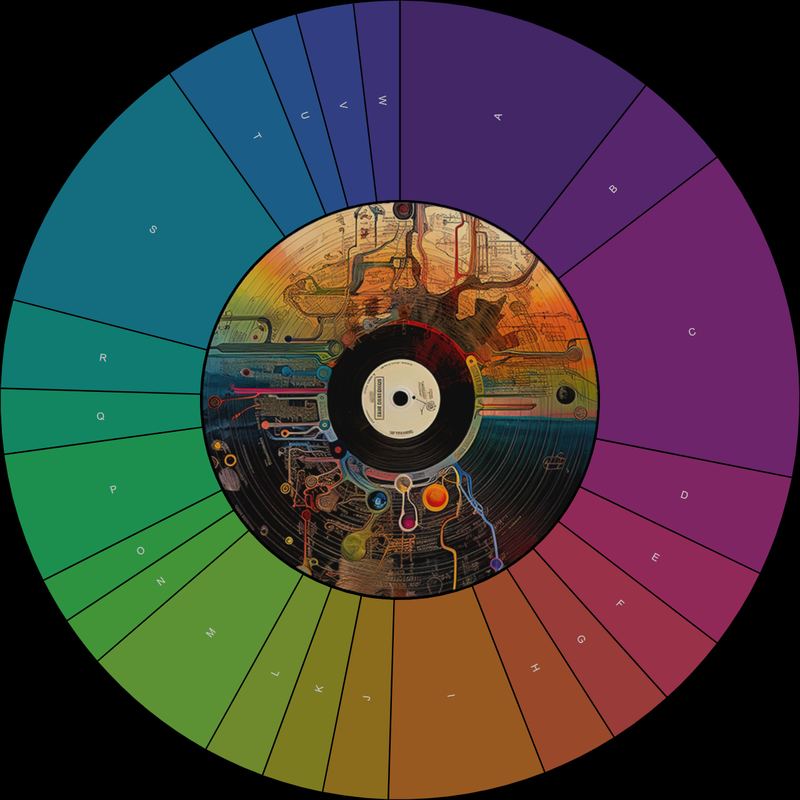
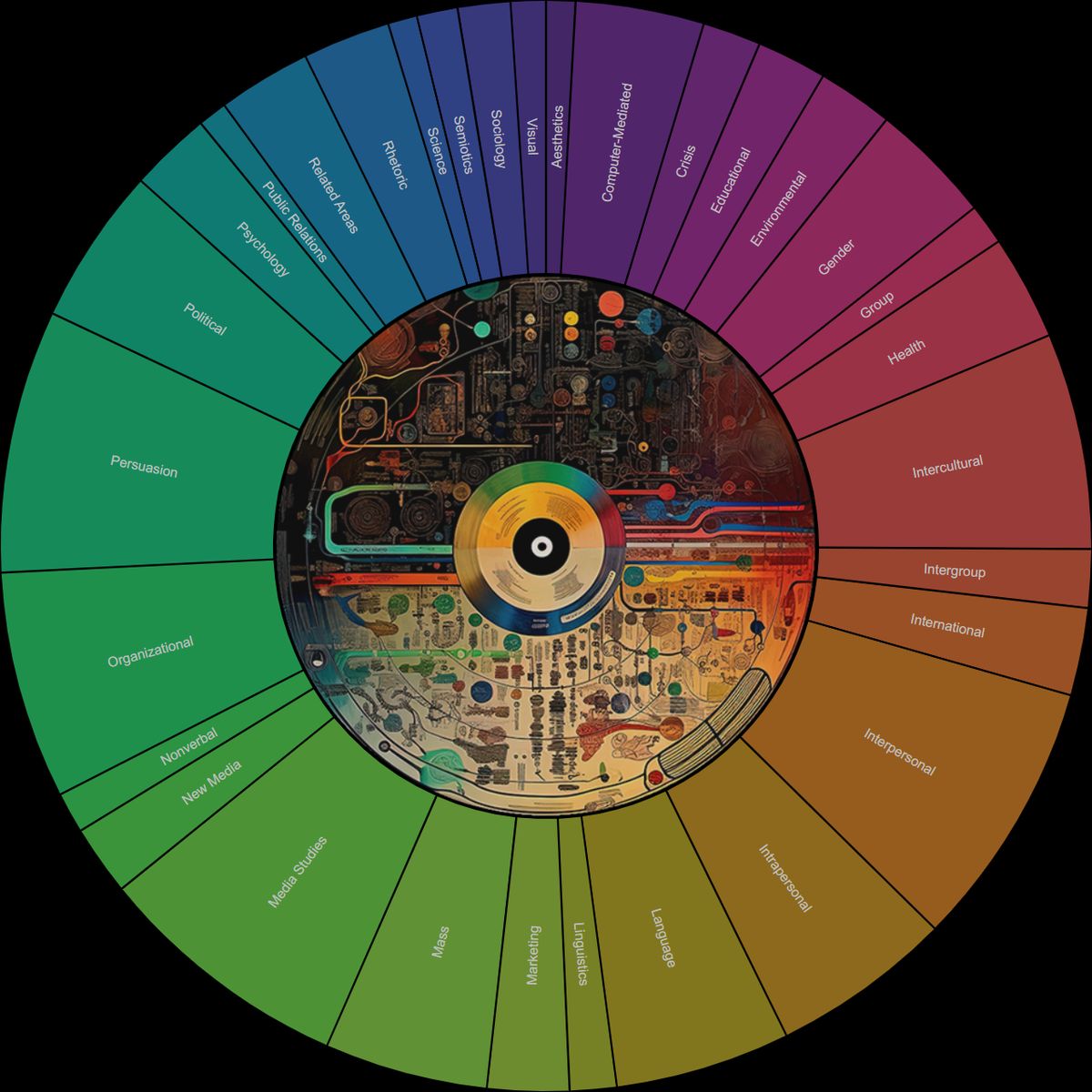
The way in is a radial index: thirty-one thematic categories drawn as segments of a sunburst, each segment sized by its share of the 586 entries — persuasion, health, aesthetics, new media, visual communication and the rest of the field's territories. To navigate is to read a map of the discipline's distribution. An alphabetical twin sits beside it; both zoom, and every slice opens an entry.
The thematic index, as the site renders it — 31 categories, segment area proportional to entry count.
The alphabetical twin. The living index →
One entry, held
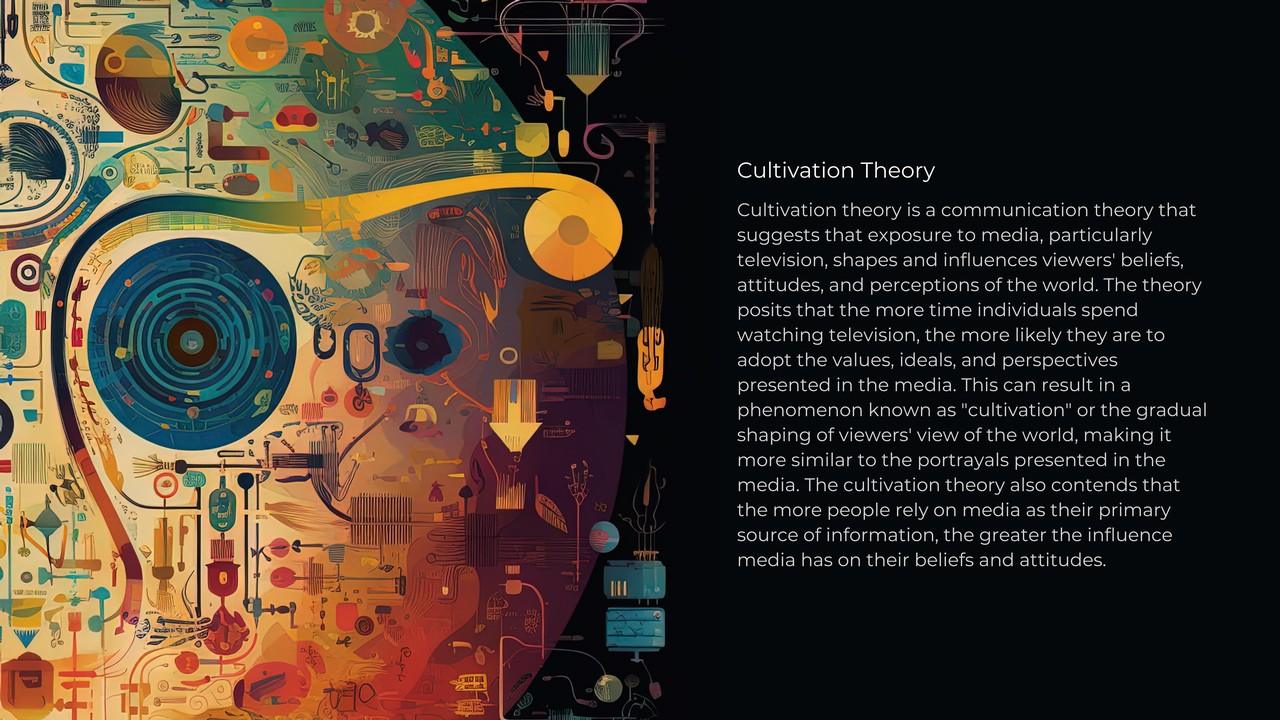
One entry of the 586, held still: Cultivation Theory — George Gerbner's account of how heavy exposure to media gradually shapes what viewers take to be real. The songbook gives it what every entry gets: a hundred-word summary, a song, and an image for each stanza — and the song does what the theory says, verse by verse: television, the feed, the news, the influencers, each one ending on the same line.
The entry's opening card, as published — summary beside its image. Twelve slides follow.

Verse 1
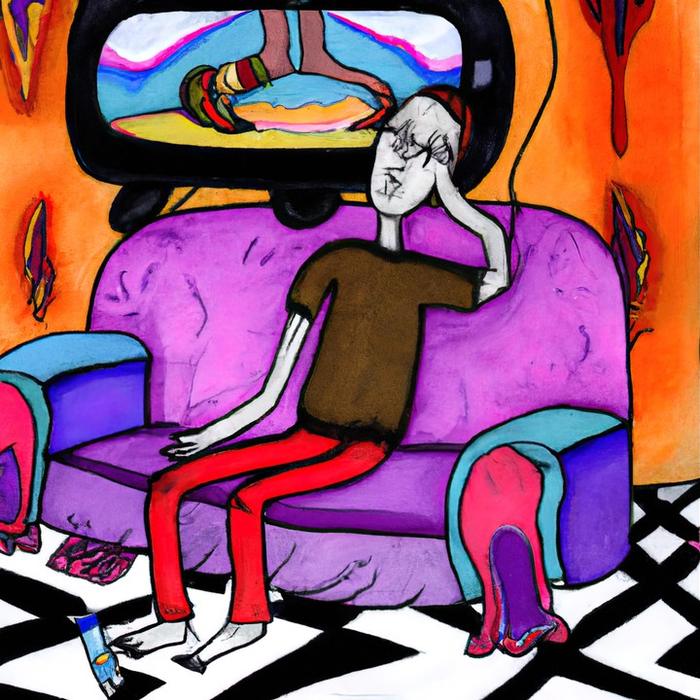
I turn on the TV, what do I see
A world unlike the one outside of me
The more I watch, the more I feel
This reality is what's truly real

Verse 2
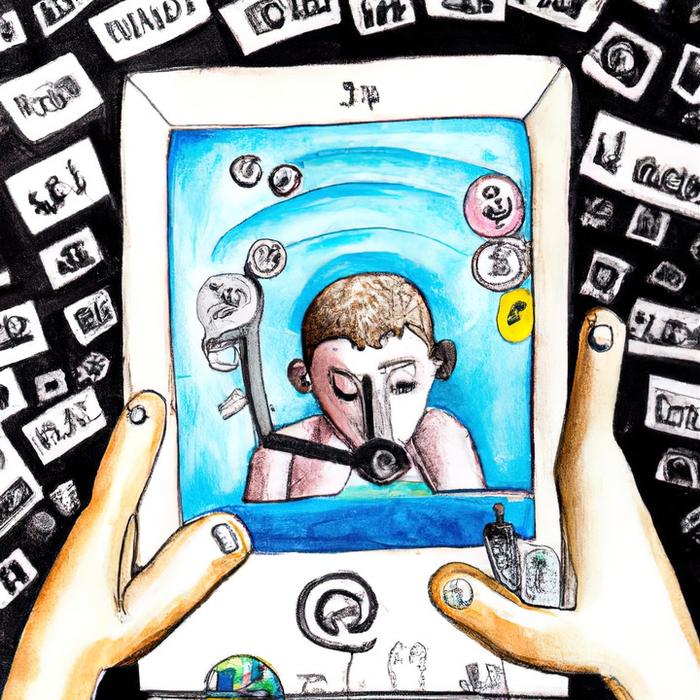
I scroll through my feed, and it seems
A distorted world of gleams and beams
The more I look, the more I feel
This reality is what's truly real

Chorus
Saturated, inundated, mind manipulated
Medias message, feeling fated
Embedded deep, beliefs created
The world on the screen, fabricated

Verse 5
I follow the trends, without a thought
A world of influencers, so sought
The more I follow, the more I feel
This reality is what's truly real
Eight verses in all, the chorus returning between them — eleven sung elements, on twelve slides. The full entry, singing →
every entry closes with its routes out — erratum · sing it · pptx · pdf · semantic scholar · google scholar · google books · university search · web search
How it was made
The songbook is a human–AI collaboration, not a machine's work. Bonilla conceived the corpus and chose its scope; designed the prompts; wrote some ninety Python programs to generate, standardize, correct, organize and publish the whole; set the structures and tested them — songs under about eleven structural elements under-explained their theory, and longer ones fatigued; the specimen above runs exactly eleven. Image prompts were negotiated the same way: results improved when "draw" and "paint" became "depict." He organized the categories, designed the interface, and selected and corrected the outputs. The models in the development's context were ChatGPT-4 and DALL-E 2; the point is not the models but the system built around them.
The prologue
Rodolfo Mata's bilingual prologue — "Scholarly Stanzas de Diego Bonilla: inteligencia artificial y poética del diálogo," published in Spanish and English on the site and catalogued by UNAM's Humanindex — reads the songbook as a possible fourth generation of electronic literature: "mega-works" made feasible by generative systems and APIs, a poetics of dialogue in which authorship relocates to conceiving the corpus, prompting, selecting, and building the system. That is Mata's proposal, offered in a commissioned prologue — substantial scholarly framing, not independent peer review. Read the prologue →
In the record
Antología Lit(e)Lat, Vol. 2 — included in the Latin American electronic-literature anthology, classified there as AI multimedia, database literature, and an educational project. Curatorial recognition within the field's networks; an inclusion, not an award.
In the scholarly literature — Maria Elisa Rodrigues Moreira's peer-reviewed article on Requiem Diurnus (Texto Digital) cites the songbook as an important earlier AI work — an independent mention, not yet a dedicated study. A learning-outcome evaluation of the songs has not been made.
On paper — U.S. Copyright registered, 2023. Two printed volumes: ISBN 979-8393473372 and 979-8393574611.
The work
Released as an open educational resource under a Creative Commons Attribution–ShareAlike 4.0 (CC BY-SA 4.0) license.
Credits
Diego Bonilla — concept, corpus, programming, curation, design.
Rodolfo Mata — prologue.
In the development's context: ChatGPT-4 (text) and DALL-E 2 (images), under human direction and correction.