

Tablada hipertextualPoesía reunida de José Juan Tablada en edición electrónica
An electronic scholarly edition · with Rodolfo Mata · UNAM · 2020
An electronic scholarly edition · with Rodolfo Mata · UNAM · 2020
The edition
Tablada hipertextual gathers the poetry of José Juan Tablada — the Mexican modernist who wrote the first haiku in Spanish and pioneered ideographic, visual poetry — as a computer program you read by moving through it.
It holds 550 texts, forty-nine more than Héctor Valdés's standard print edition (Obras I. Poesía, UNAM, 1971) — some recovered by Esperanza Lara, others through Rodolfo Mata's research. The authors call it poesía reunida, gathered — not completa, complete: dispersed poems may still surface, and the edition is honest about it. Programming, electronic editing, notes and design are by Diego Bonilla and Rodolfo Mata; it was published by the Centro de Estudios Literarios, Instituto de Investigaciones Filológicas, UNAM, in 2020.
It is not a search engine. A click does not return a list of results — it carries you to the next poem, building a reading path through the corpus.
550 poems · 2 hyper-indexes · 4 text colors · ISBN 978-607-30-3239-1
The mechanic
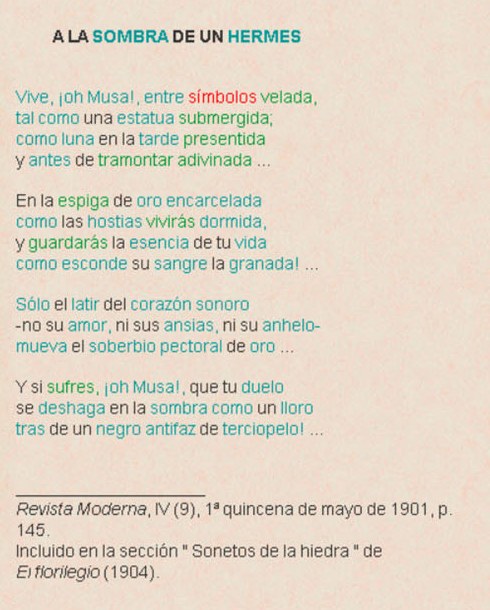
Every word in every poem is colored by how it behaves across the whole corpus. Click a word and the edition carries you to the next poem where it appears; click it again, the next — a circular itinerary that ends where it began, leaving a trail of red behind you. «La palabra será la misma pero su contexto será diferente» — the word stays the same; its context changes.
un el
de un de
tu mi
la del .
la … de
en tu , en , mi
y te mi ,
¡oh !, ¡en del !
Y ni un de !
Y que mi
con sus tus .
Y que te al mi
un sus
el de una !
ABRAXA · Sin título, en Revista Moderna, III (3), 1ª quincena de febrero de 1900, p. 33. Incluido en la sección «Sonetos de la hiedra» de El florilegio (1904).
Click a colored word above — watch your trail turn red.
One poem from the edition, its coloring preserved exactly. The red murciélago is the trail of an earlier reader, who chased the bat through the corpus. The full edition holds 550 poems.
The apparatus
Two hiperíndices hold the edition together — not reference lists but networks of links. The index of poems orders all 550 chronologically, through the books that carried them. The index of words lays out Tablada's entire poetic lexicon, A to Z, each word paired with every poem it appears in:
murciélago 12 · 19(2) · 85 · 127 · 150 · 234(2) · 352 · 369
The bat is in poem 12, once; in 19, twice; in 85, once — and on through the corpus.
Tablada's ideographic poems (Li-Po y otros poemas, 1920) enter the corpus as linear transcriptions — after Zaid and González de Mendoza — so they can be traced electronically, set alongside the original images so their visual life is never stripped away.
The lineage
The system began as Poesía Densa, Bonilla's reading engine for Tablada, published inside the UNAM CD-ROM José Juan Tablada: letra e imagen (2003, coordinated by Mata) — with deeper roots in Mata's Tablada CD-ROMs of the late 1990s. Bonilla in Sacramento and Mata in Mexico City built it remotely, by email and FTP; they did not meet in person until 2011.
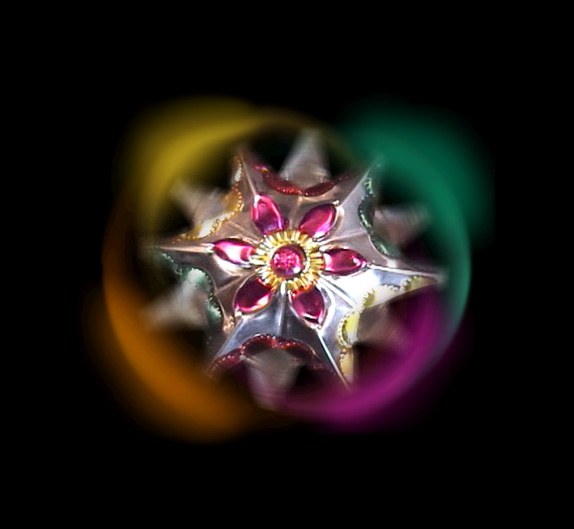
When the Shockwave technology it ran on fell obsolete, the two expanded, revised and reprogrammed the whole system, and UNAM published Tablada hipertextual in 2020. Not conceived in 2020, not finished in 2003 — one idea, grown across two decades. The edition's opening emblem is itself an inheritance: its design is drawn from the artist Jorge Enciso's 1918 cover for Tablada's Al sol y bajo la luna.
In the record
The two essays — the edition carries its own scholarship, downloadable from within the program: Rodolfo Mata, «Hiperíndices: ventanas al léxico en la poesía reunida de José Juan Tablada» (on the making of the word-index), and Diego Bonilla, «Sobre la importancia del pensamiento computacional y la literatura» (on why editing literature for digital media asks for programming as much as philology).
Literatura Mexicana, 2021 — reviewing the edition (32.2), Coral Alvarado Velázquez praised its editorial care, the clarity of its documentation, the way it binds programming to scholarship, and the reusable model it offers — with one wish: a way to switch the coloring off for continuous reading. (The plain-ink switch above is this page's small answer to that.)
Gragoatá, 2016 — Rodolfo Mata's peer-reviewed account of the system's genesis, "Digital José Juan Tablada and the Genesis of a Hyper Reading" (21.41).
Open it
The edition is alive and publicly hosted by UNAM's Instituto de Investigaciones Filológicas — a program to download for PC and Mac, with its documentation and a demonstration video.
Published by UNAM, 2020. Download and system requirements are given on the edition's own page.
Credits
José Juan Tablada — the poems.
Diego Bonilla & Rodolfo Mata — programming, electronic editing, notes & design.
Centro de Estudios Literarios, Instituto de Investigaciones Filológicas, UNAM · Mexico City, 2020.